Writing
Create a consistent AI character with Pixio
updated 2026-09-12
To keep an AI character consistent, approve one portrait, save its fixed traits, and reuse both for each image. Build a reference sheet from that portrait. Check every face before making video. A longer prompt alone will not prevent changes.
I used Pixio to make realistic Nerd Dad, three original adult characters, and the Saturday cartoon cast. This guide shows the prompts, reference sheets, repairs, and video frames. All character artwork shown here was made with AI. Select an image to see it larger.
By Dylan J. Harris. Tested September 12, 2026.
Two useful methods from M. Asif
Credit goes to M. Asif (@meAsifAi). His first post uses a broad production board: poses, expressions, materials, and proportions. His second post concentrates on one face, with 24 studies of angles, expressions, clothing, and close details.
The templates below are our adaptations. Read his posts for the original prompts. We used our own characters, not the woman in his examples.
| Need | Use |
|---|---|
| Poses, clothes, props, and animation planning | The broad production board in step 2 |
| Closer checks of a realistic face | The 24-study sheet in step 3 |
| Several cartoon characters in one scene | Separate cast sheets in step 6 |
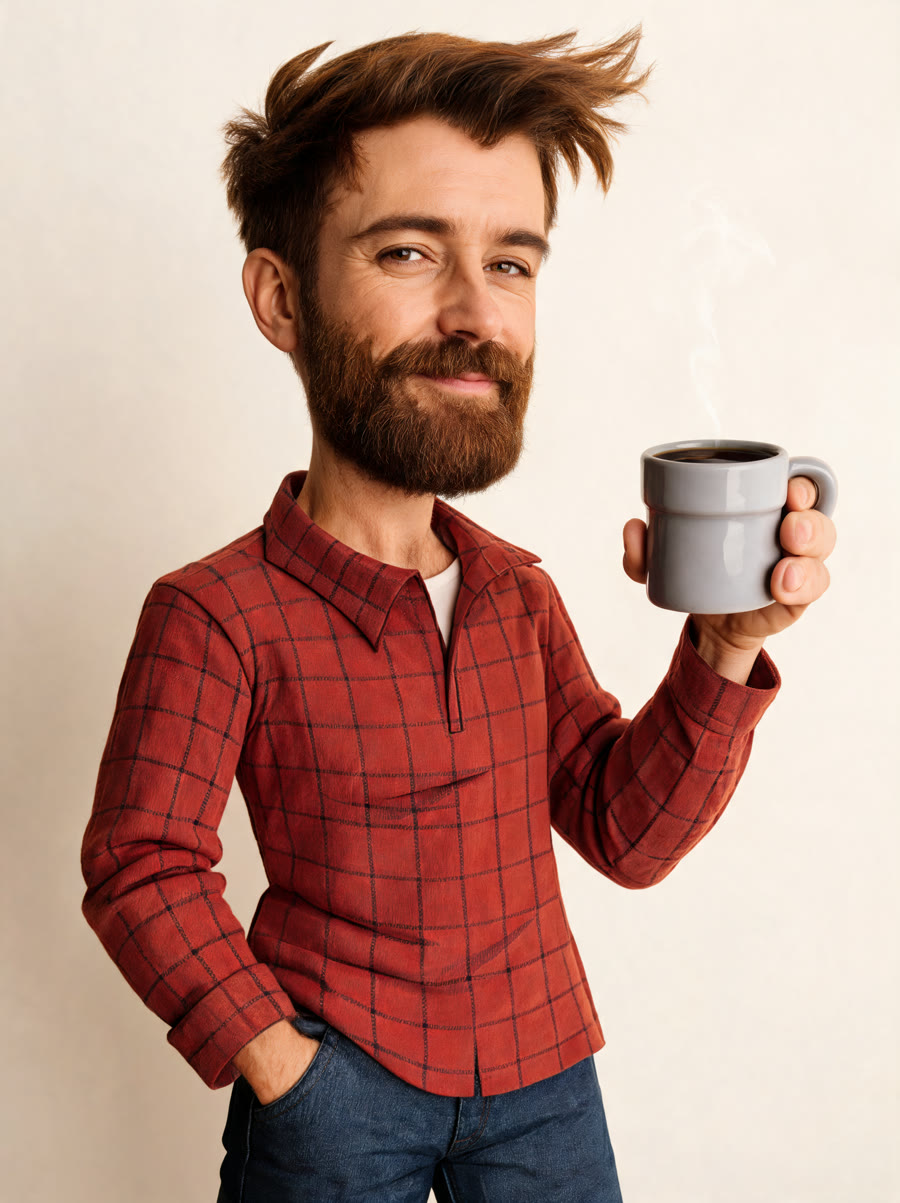
Start with one portrait. Here is how the same traits carried from cartoon to realistic Nerd Dad:

1. Choose the face first
For Nerd Dad, we used Seedream 5 Maker in image-to-image mode at 3:4 and the 4K setting. Attach your illustration and adapt this prompt:
Create a realistic portrait of the fictional character
in the attached illustration.

Keep the recognizable face, hair, colors, clothes,
and prop. Use natural human proportions.

Character: [age, build, face, hair, distinguishing traits]
Clothes: [garments, colors, patterns, shoes]
Prop: [object and which hand holds it]
Expression: [resting expression]

Use soft studio light and a plain off-white background.
Show the whole head, both arms, and the prop.
Make one portrait. No panels or labels.
Already have the right portrait? Use it and skip this step.
Save the traits beside the image. Mine: swept brown hair, full beard, small smile, red plaid pullover, gray mug in his left hand.
2. Build the sheet
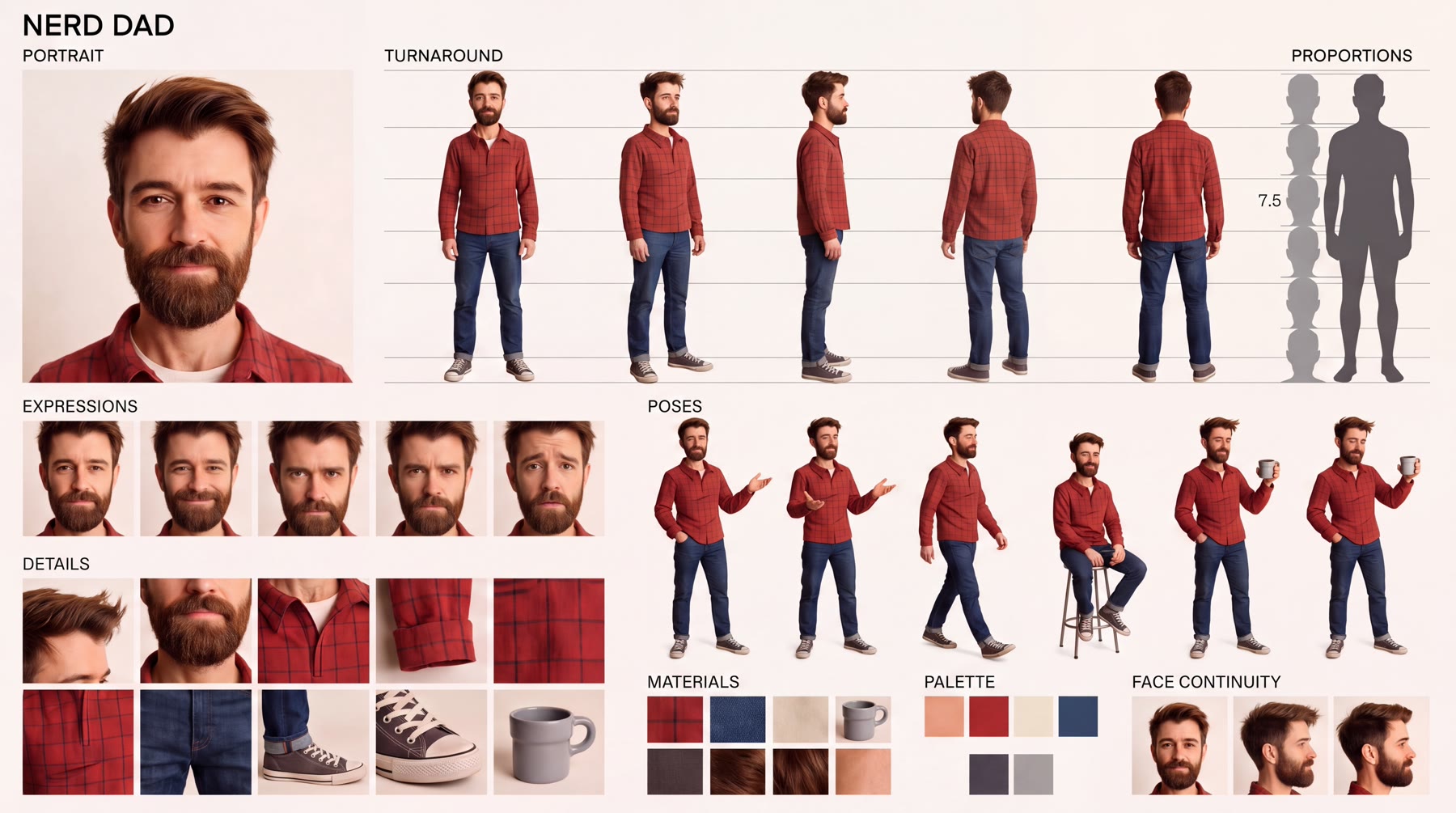
Upload the approved portrait to Nano-Banana 2 Edit. We requested 16:9 at the 4K setting. Replace the brackets below. Download the reusable prompts.
Make a character reference sheet for [NAME].
Use the attached portrait to define this character.

Keep these traits in every panel:
[age, face shape, eyes, hair, facial hair, skin tone,
body build, clothes, patterns, shoes, accessories].
Prop: [object, color, size, left or right hand].
Style: [photographic, illustrated, or another style].

Use a wide 16:9 sheet with an off-white background.
Use even studio light, clear spacing, and short labels.

Include these sections:

1. Main portrait
One large face view with a calm resting expression.

2. Views around the body
Five standing views: straight ahead, angled toward us,
side-on, angled away, and directly from behind.
Show each at the same size. Align the eyes, shoulders,
waist, knees, and feet. Keep the whole figure visible.

3. Expressions
Six face views: resting, pleased, focused, determined,
surprised, and sad. Keep the face size and light fixed.
Change the expression without changing the person.

4. Poses
Six poses: standing casually, gesturing, walking,
sitting, using the prop, and [a signature action].
Keep the outfit and body build fixed.

5. Close details
Show the hair, face, collar, cuffs, shoes, and prop.
Keep seams, patterns, and left/right details correct.

6. Materials
Show small samples of the actual surfaces:
[skin, hair, cloth, denim, ceramic, or other materials].

7. Colors
Show the main colors from the portrait as swatches.
Separate skin, hair, clothes, and prop colors.

8. Shape and proportions
Include a plain silhouette and body alignment guides.
Match the portrait's proportions.

9. Face check
Repeat the face from the front, an angle, and the side.
Each must match the main portrait.

Keep figures separate. Do not crop heads or feet.
Do not add accessories, change outfits, or swap hands.
Keep labels brief. Do not add scenery or claim a
resolution that the output does not have.
3. Make a closer face reference
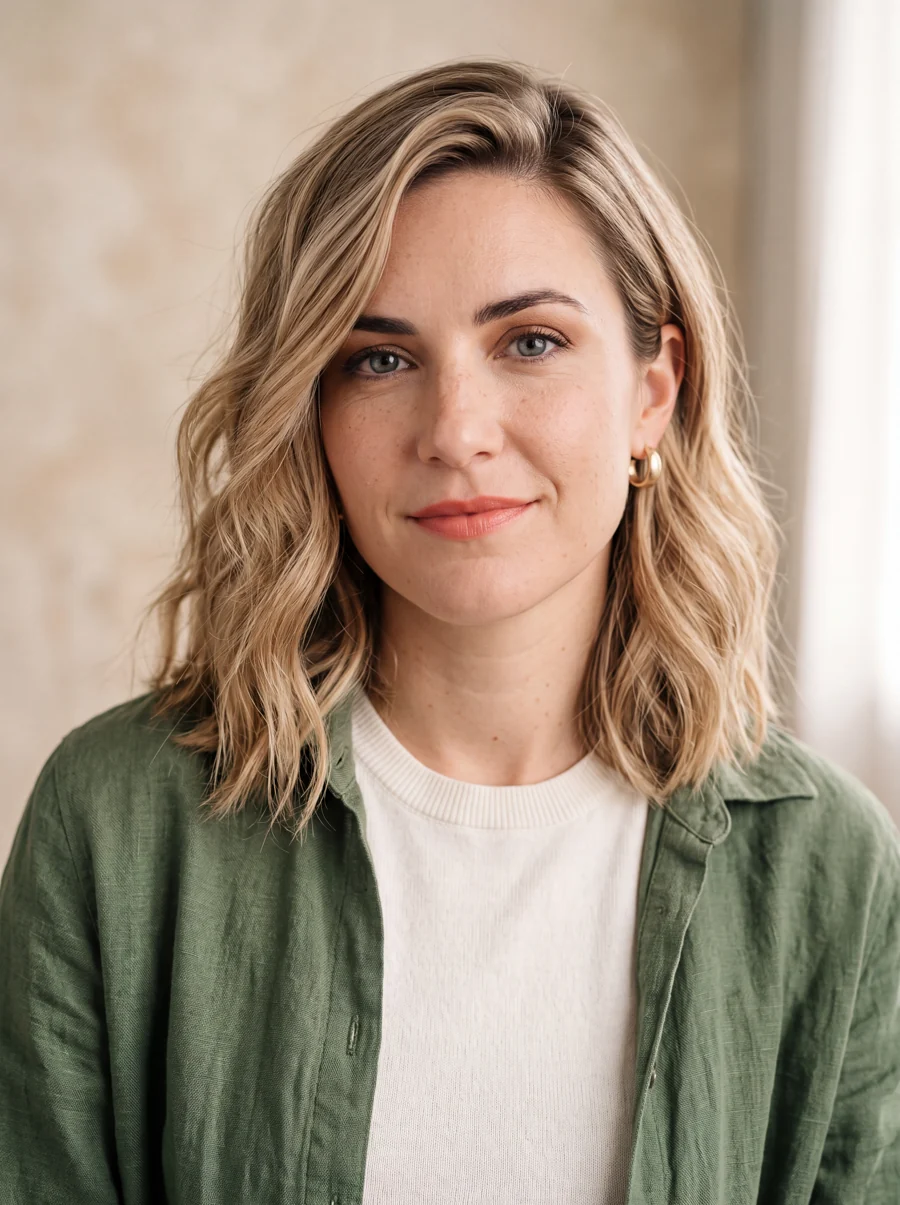
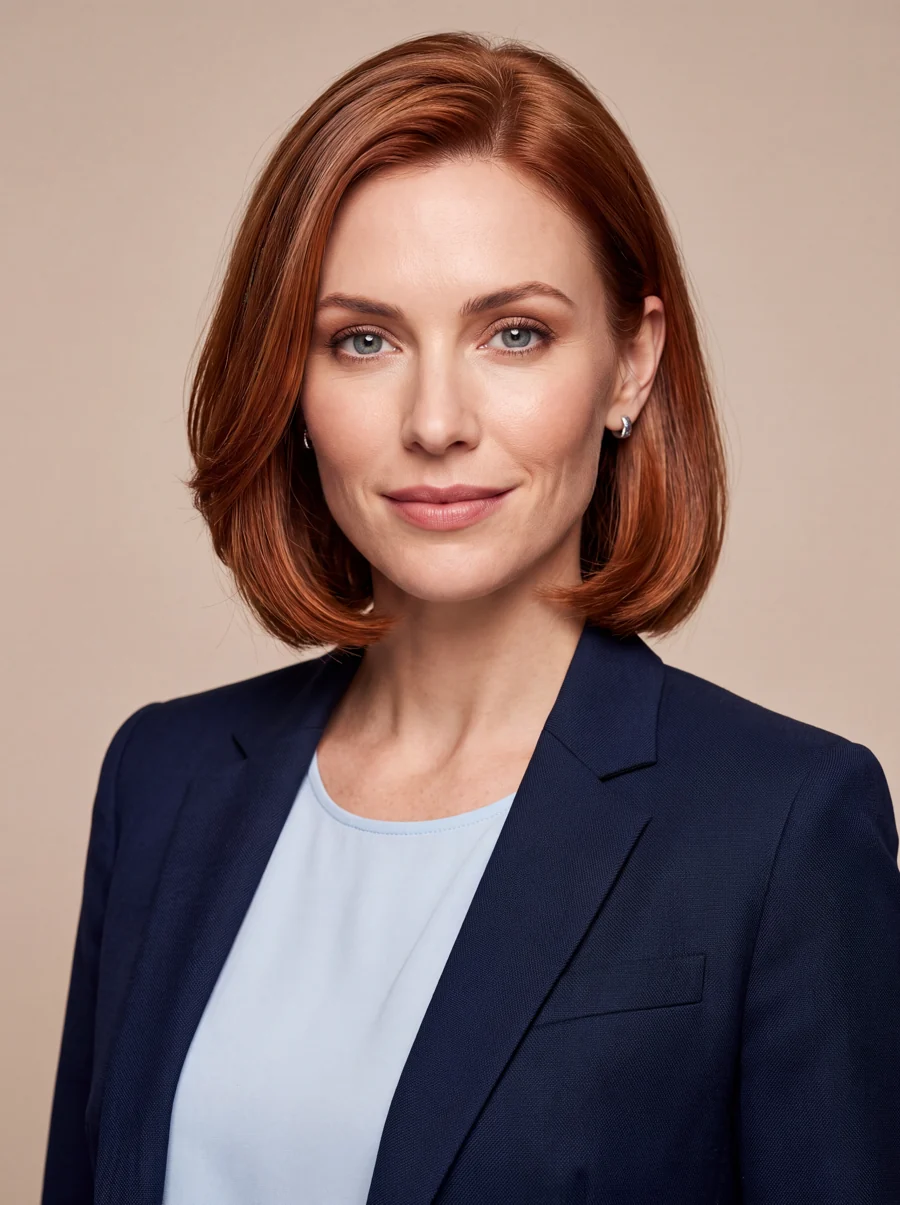
Asif's second method adds more facial detail. We tested it on three new fictional adults. The brief borrowed broad visual cues from Scarlett Johansson, Dana Scully, and Fox Mulder. We gave each design its own name, face, and clothes. No actor photo was uploaded.
Nano-Banana 2 made the portraits from text at 3:4 and 4K. We refined the women’s hair, makeup, and expressions for a commercial look. We reviewed each portrait, then supplied it to Nano-Banana 2 Edit for a 16:9, 4K sheet. Each sheet received only its own character's portrait.

The reusable face-sheet prompt
Attach one approved portrait. Replace the bracketed notes. This shorter template keeps the structure from Asif's second post:
Make a photographic reference sheet for [NAME].
The attached portrait defines the identity.
Keep the face, age, eyes, nose, mouth, jaw, skin,
hairline, hairstyle, and build consistent.
Do not beautify or replace the face.
Infer unseen angles without adding new traits.

Fixed outfit and accessories: [DETAILS].

Use a wide studio board with a large main portrait,
soft even light, thin dividers, and short labels.
Include these 24 studies in clear groups:

Identity: 1 large front face.
Head: 2 front; 3 left three-quarter; 4 right three-quarter;
5 left profile; 6 right profile; 7 rear.
Body: 8 front; 9 three-quarter; 10 side; 11 rear.
Expression: 12 neutral; 13 natural smile; 14 slight smile;
15 gaze left; 16 gaze right.
Details: 17 eye; 18 brow; 19 nose; 20 mouth; 21 hair;
22 accessory; 23 outfit; 24 skin and clothing colors.

Keep full-body figures at equal scale, head to shoes.
Show natural skin, hair, and fabric. Keep the same light.
Avoid altered faces, plastic skin, wrong proportions,
cropped feet, overlapping figures, and extra limbs.
Change the expression without changing the person.
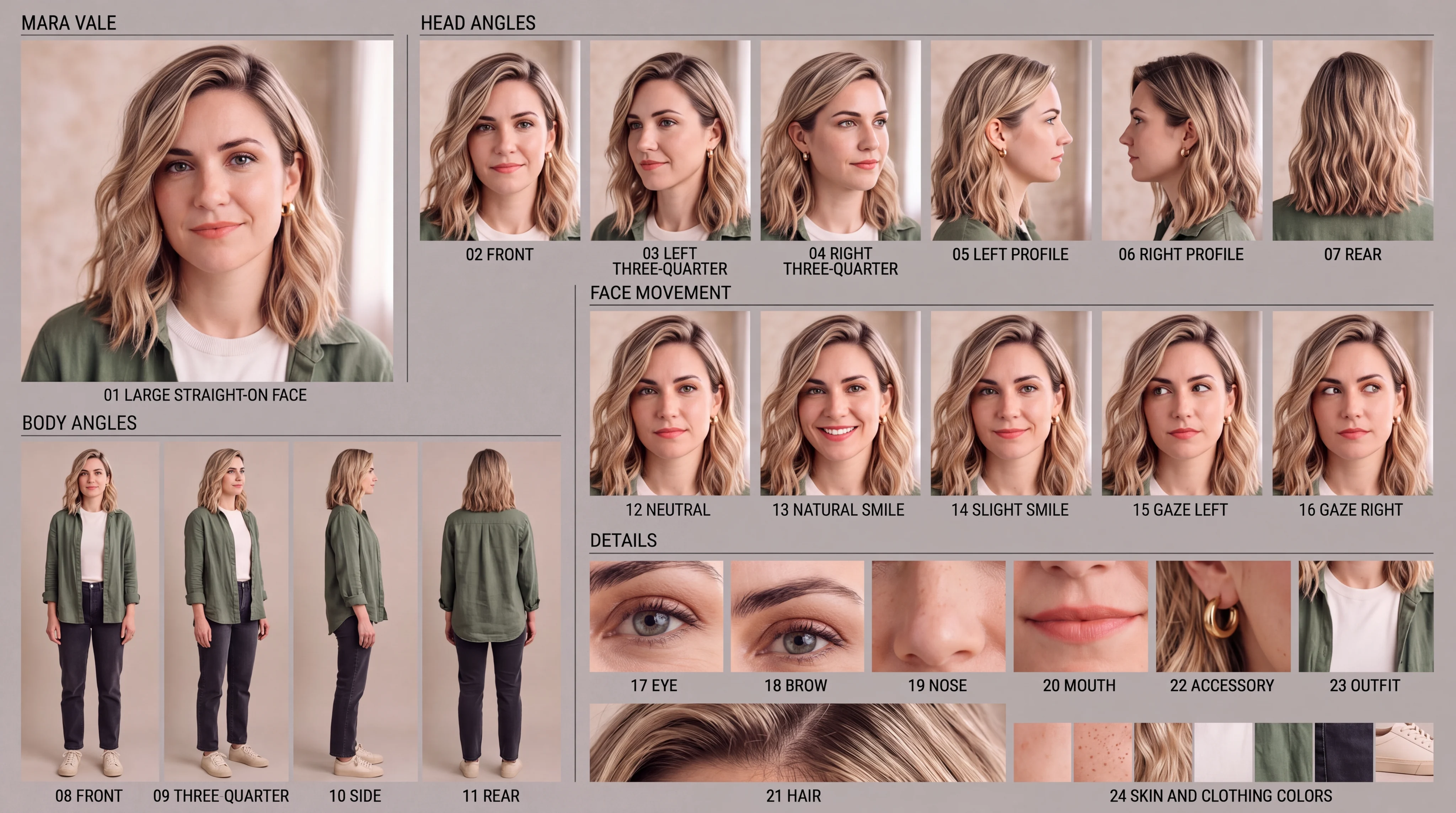
Mara Vale: warm screen presence
Mara uses dark-rooted golden-blonde waves, gray-green eyes, light freckles, and a compact, curvy athletic build. Her moss overshirt, ivory top, charcoal jeans, and small brass hoops give her a repeatable look.
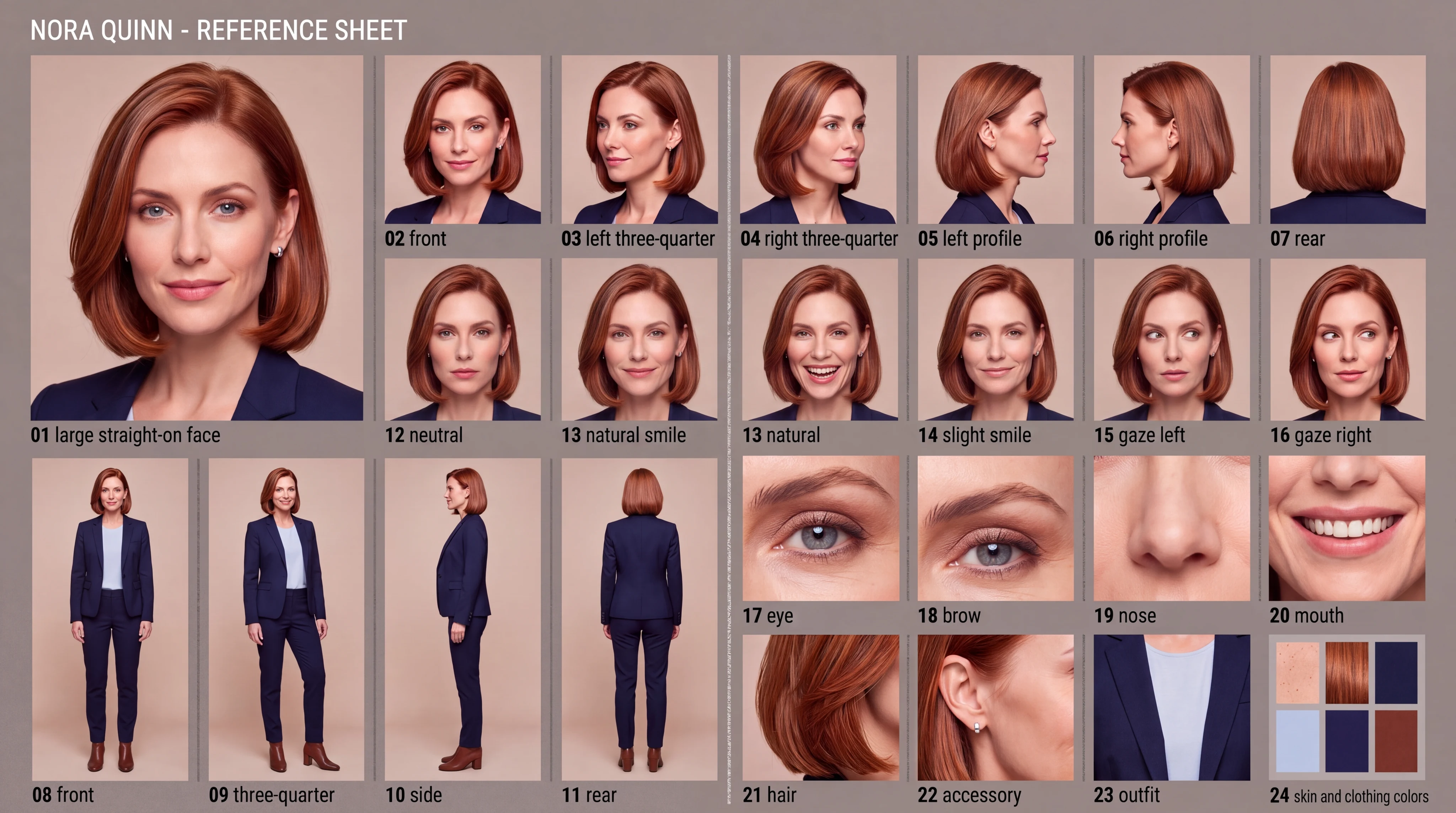
Nora Quinn: the composed scientist
Nora has a copper bob, blue-gray eyes, and an elongated heart-shaped face. Her navy suit, pale blue blouse, and silver studs borrow Scully's restrained style without using the character's identity.
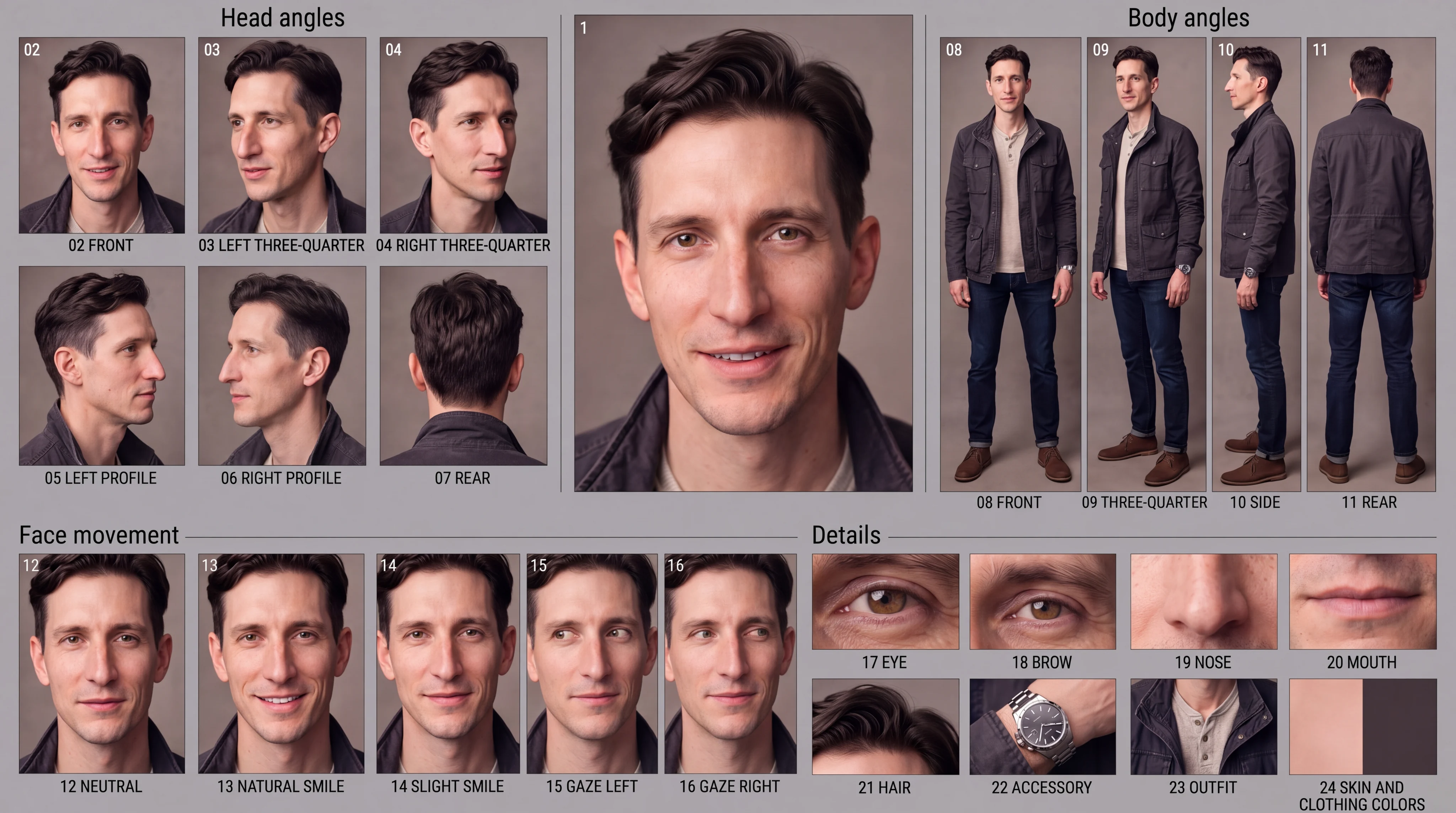
Evan Mercer: the curious investigator
Evan has tousled dark hair, hazel eyes, a prominent nose, and a trace of stubble. A charcoal field jacket and oatmeal henley replace the formal agent suit. Keep his steel watch on his left wrist.
Download the three profiles and exact generation prompts. Keep these notes with the portraits. New outfits can come later; establish the face first.
4. Check every panel
Compare each face with the portrait. Check hair, clothing, hands, props, and rear views. Count the panels. Check what a panel shows, not just its label.
Evan’s first sheet repeated one side profile. A focused edit restored the opposite view and corrected one gaze direction. Nora’s first sheet duplicated views and omitted a gaze study. Mara’s figures were correct, but three section headings were wrong. The edits fixed Evan’s views and Mara’s headings. Nora’s edit kept an extra smile panel and did not reverse the left gaze. Her portrait remains the face reference; do not rely on those labels. These are the kinds of errors a quick glance misses.
The original Nerd Dad sheet returned five expressions instead of six. An edit improved the rear angle and surprise expression but missed the sixth panel. Small faces still varied.
To repair it, attach the sheet and portrait. Name one error. Request a change to that area only. Check again.
Reuse the large portrait for identity. Use the sheet for clothes, poses, and angles. It is a visual guide, not a rigged 3D model.
5. Test the character in motion
Use the portrait as the starting image. Kling O3 4K Maker gave us a smile, wink, and coffee sip. We supplied the same prepared image for both end frames, then processed the take into a 30-second loop.
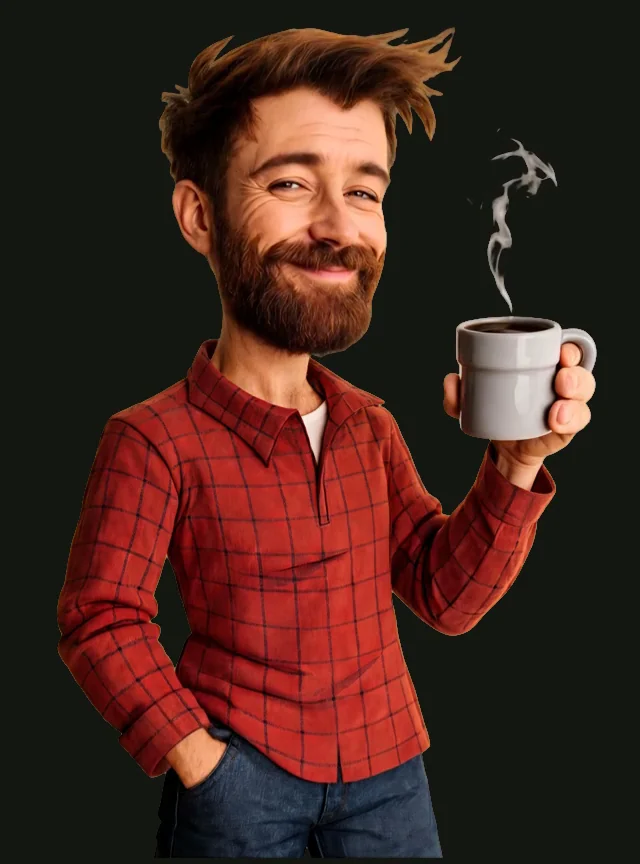
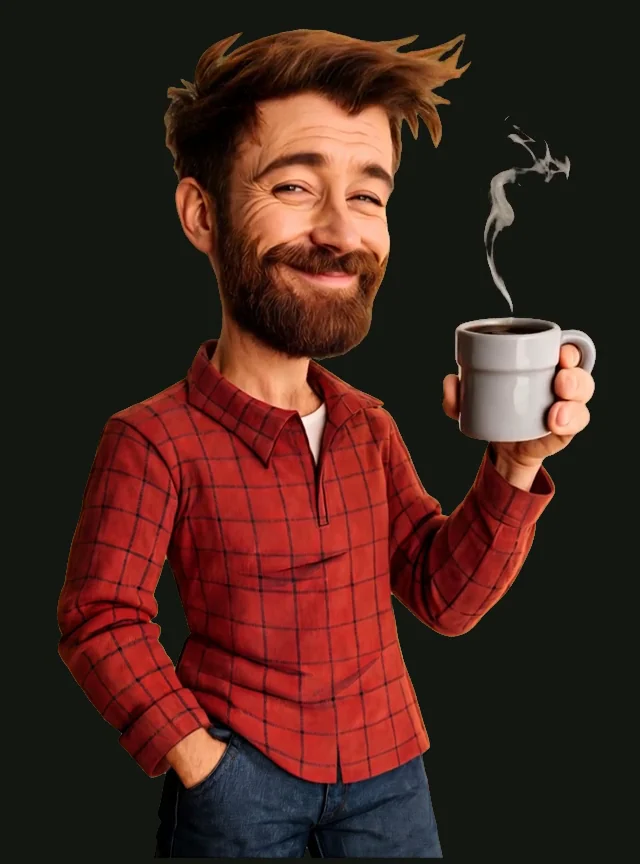
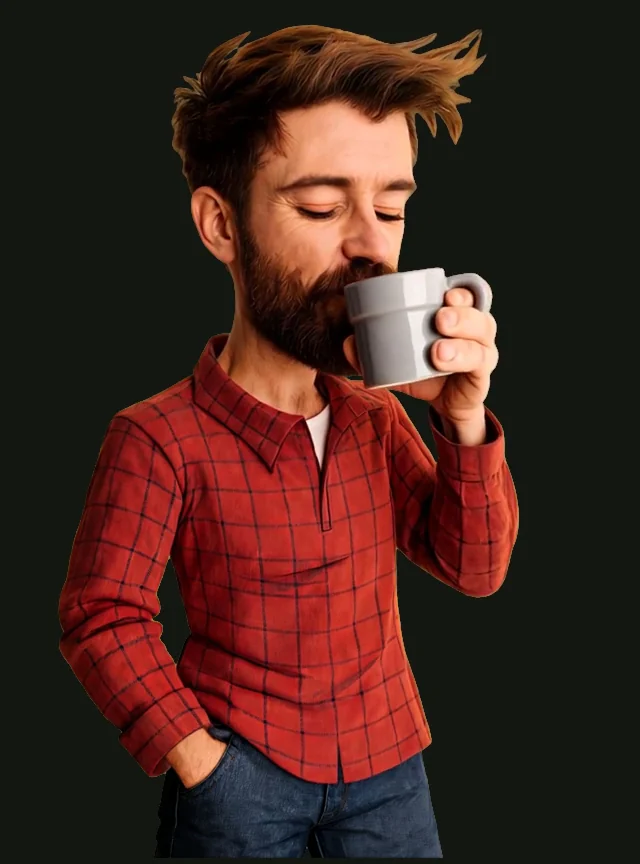
These are frames from the finished loop. Check the mouth, hands, and loop seam in playback. Matching references do not guarantee a clean loop. See the realistic version or the cartoon version.
6. Build a small cast: Saturday
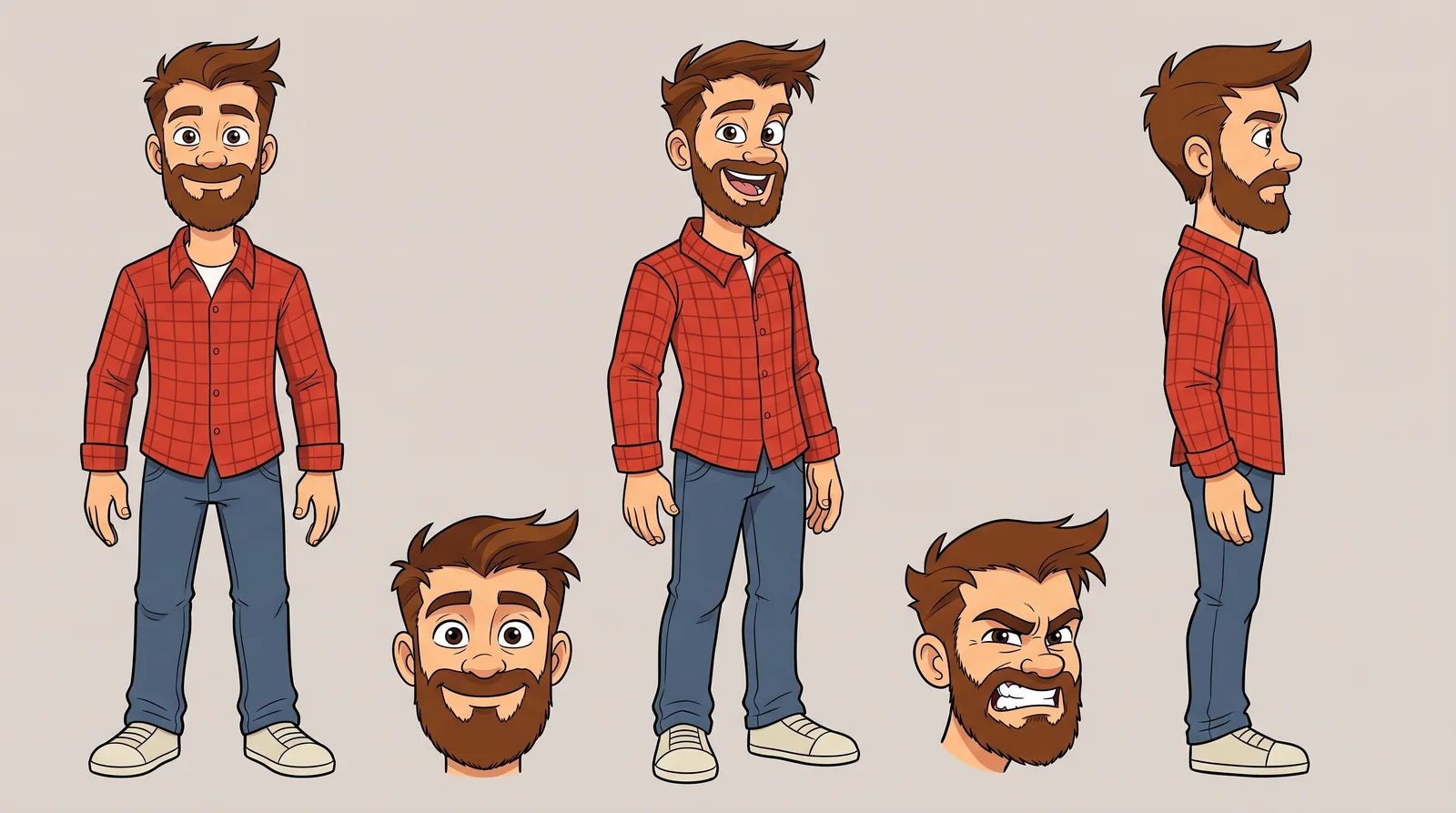
For my Saturday song, we kept the cartoon style. Nano-Banana 2 Edit made Dad's sheet, then a separate sheet for each child. We requested 16:9 at 2K.
Start with the lead character
Dad's approved homepage illustration defined his face, hair, beard, and shirt. The sheet added a full body and clear expressions for animation.
Give each reference one job
For each child, a supplied photo defined the appearance. Dad's sheet defined only the drawing style and layout. This kept the cast visually related without copying Dad's adult features.
Adapt this shorter sheet prompt for each new cast member:
Create one cartoon character sheet for [CHARACTER].

Reference 1 defines this character's appearance.
If it contains several people, use [which person].
Reference 2 defines only the drawing style and layout.
Do not copy its face, age, hair, body, or clothes.

Keep: [face, hair, build, outfit, colors, shoes].

Show front, angled, and side full-body views,
plus two close-up expressions. Use one plain background.
Keep every view consistent. Show all hair and shoes.
Keep hands empty so the outfit stays visible.
Use clear outlines, flat colors, and simple shadows.
Fix the design before making scenes
The girl's first sheet had brown hair. We changed only the hair color to golden dirty blonde, then saved the corrected sheet as the new reference.
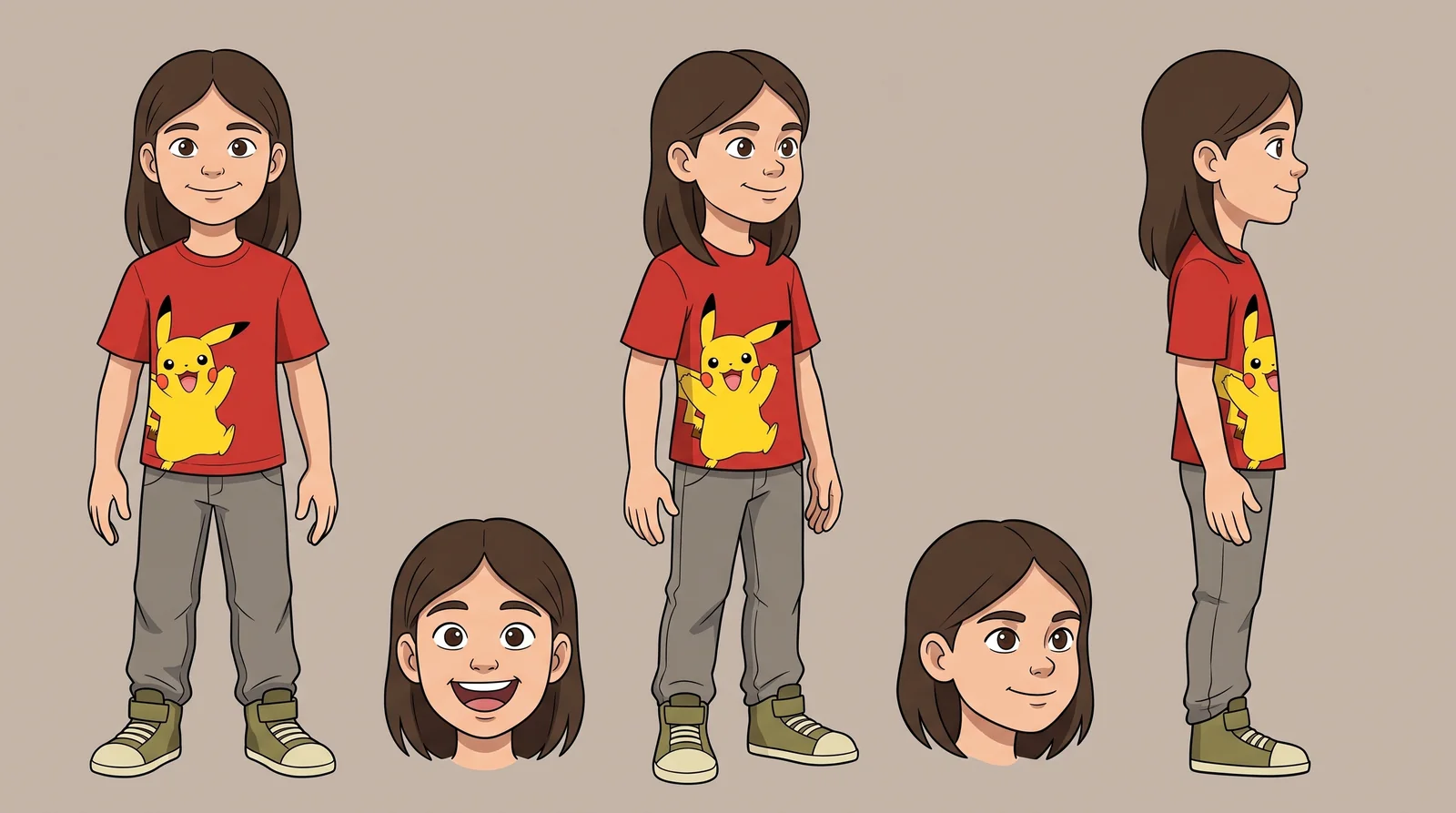
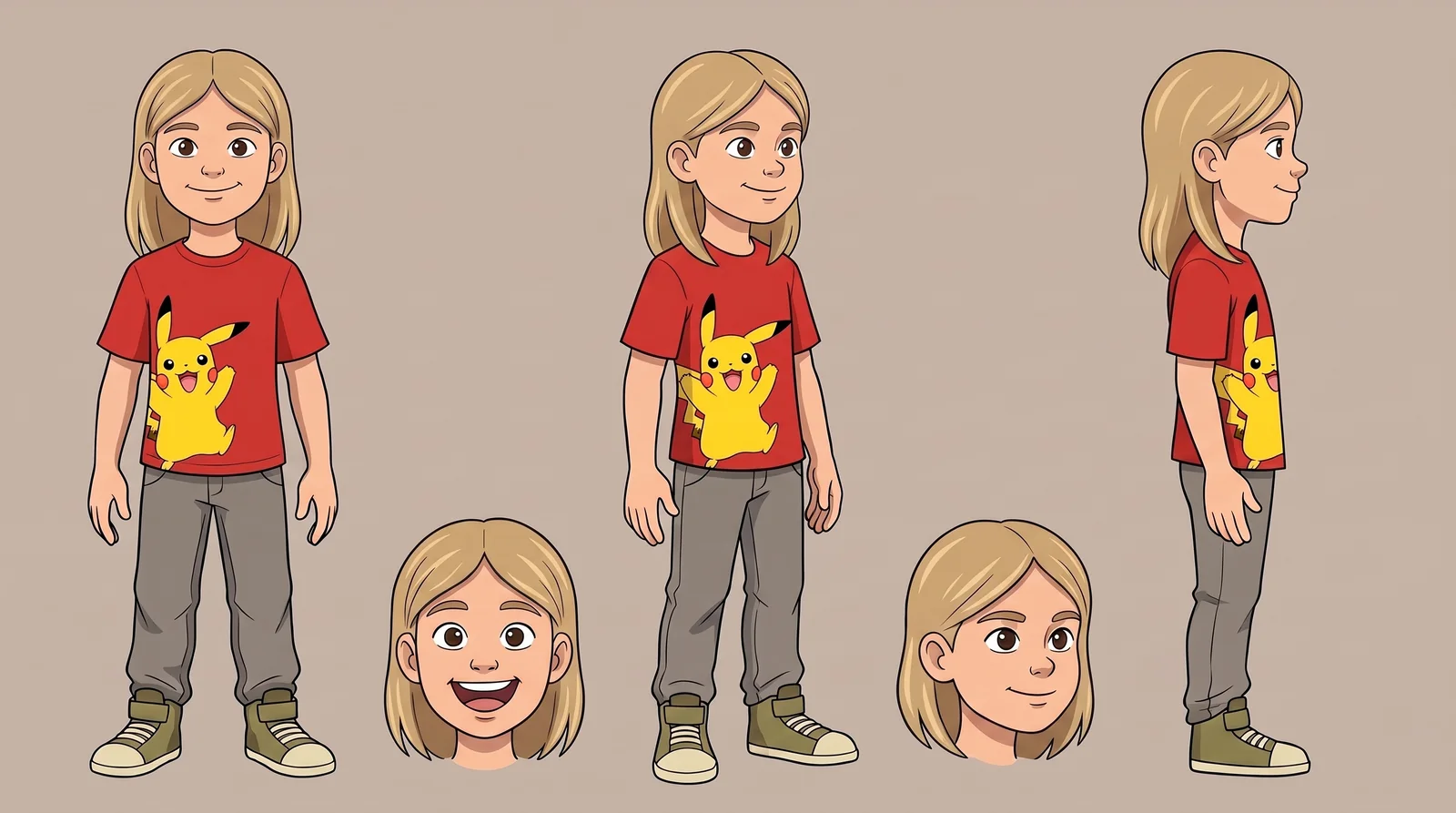
The repair prompt kept the change narrow:
Edit this character sheet. Change only [specific trait]
in every view and close-up to [exact description].

Preserve the face, proportions, poses, clothes,
other colors, outlines, shading, and page layout.
Do not change anything else. Apply the fix to every panel.
The other child's short brown hair, gray shirt, and dark jeans made the two designs easy to tell apart.
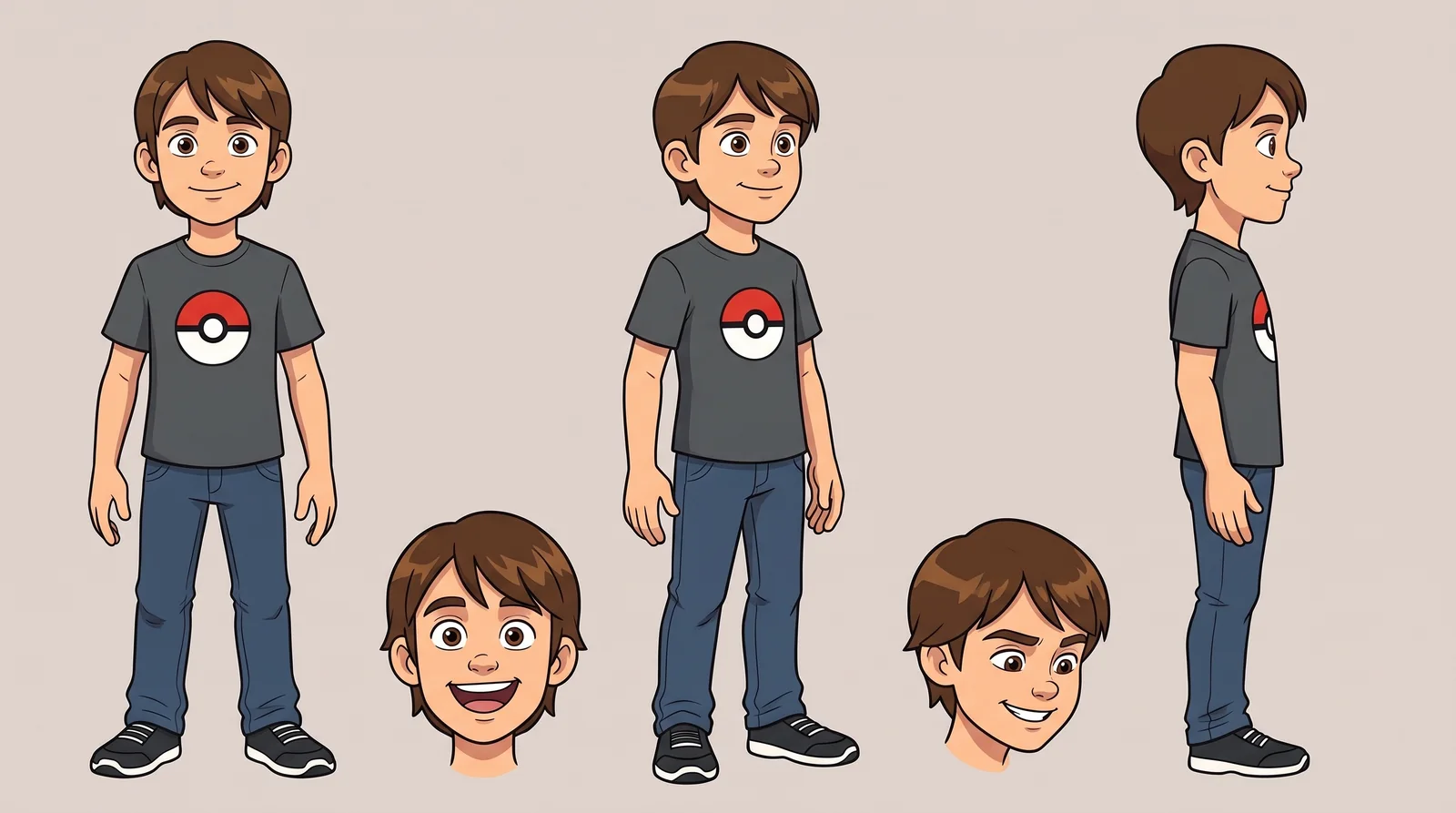
Save a short written profile beside each approved sheet. Record the outfit, colors, hair shape, and height relative to the other characters. Retire old references after a correction.
Keep the props consistent too
The truck and card boxes recur across shots. They received their own sheet: one dark blue pickup and broad, shallow white storage boxes.
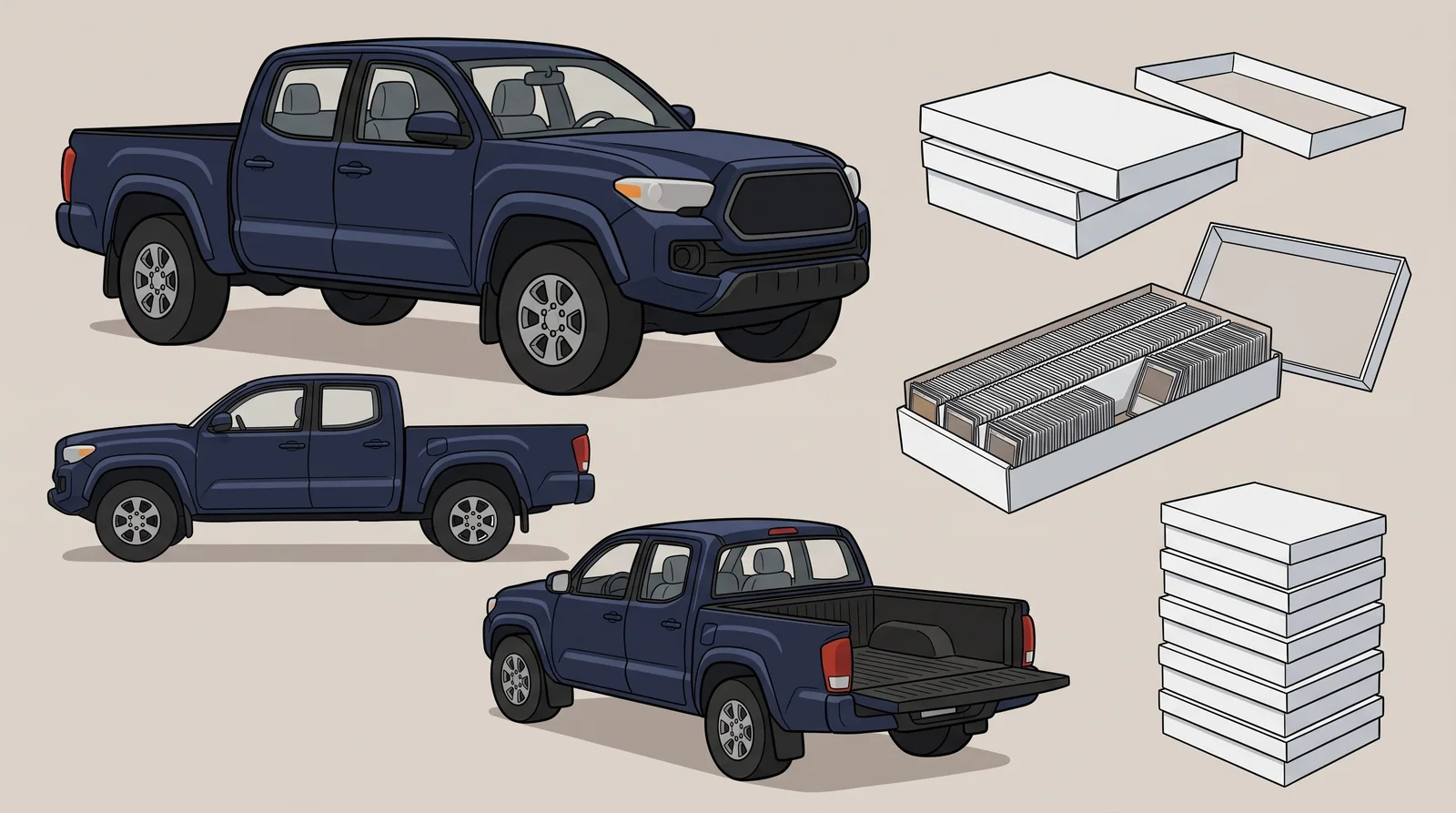
Approve the shared scene before motion
We supplied four references with explicit roles:
| Reference | Defines |
|---|---|
| 1. Dad's sheet | Dad's face, build, and clothes |
| 2. Girl's corrected sheet | Her golden hair, face, and outfit |
| 3. Boy's sheet | His short hair, face, and outfit |
| 4. Scene reference | Storefront, truck, and boxes |
State who stands where, who is taller, and what each person does. Our first family frame hid part of Dad's face behind the boxes. We repaired that before generating motion.
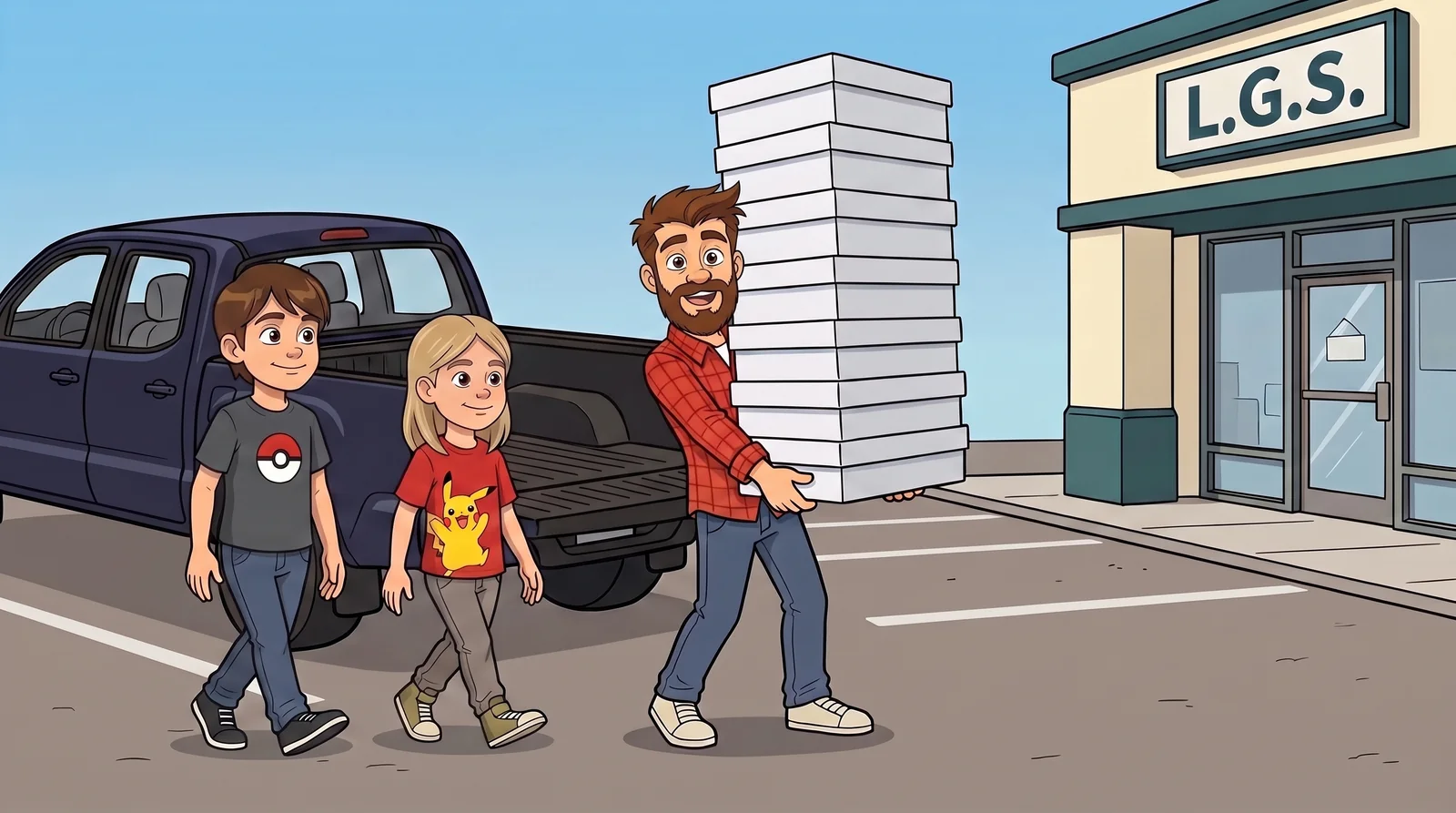
Compare the characters across shots
These frames come from our joined 20-second opening preview. The full music video is still in progress.
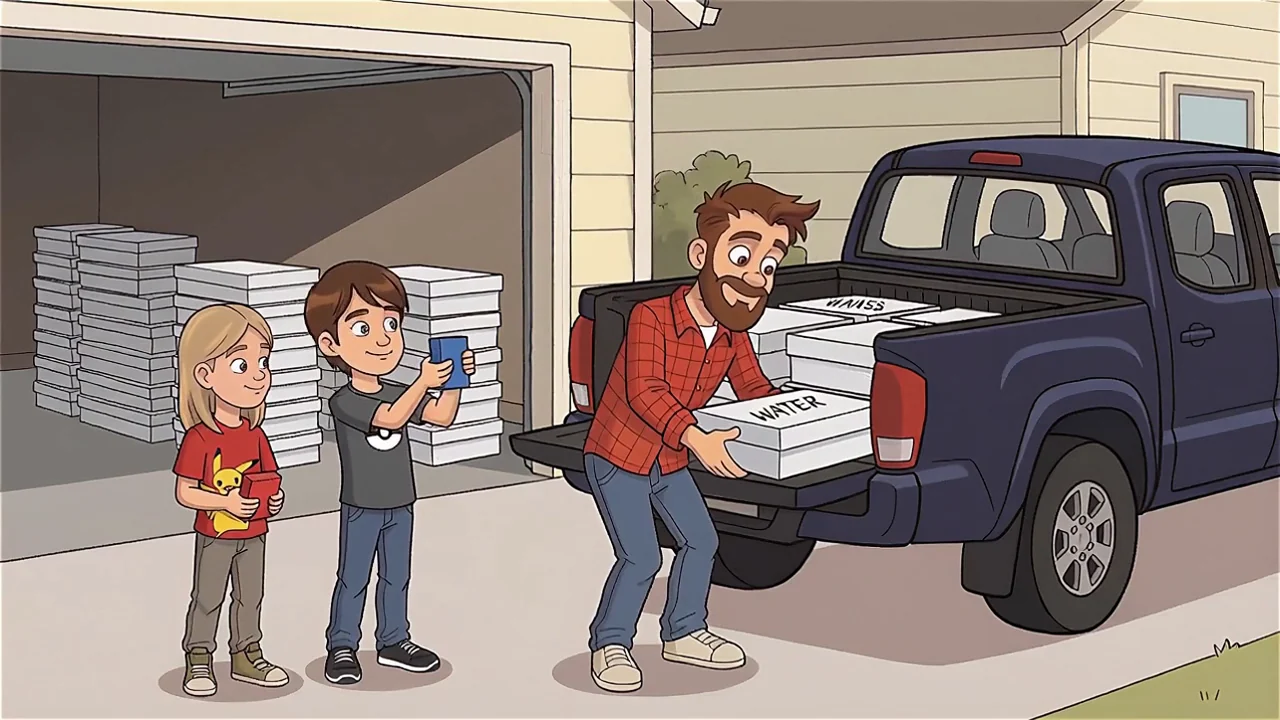
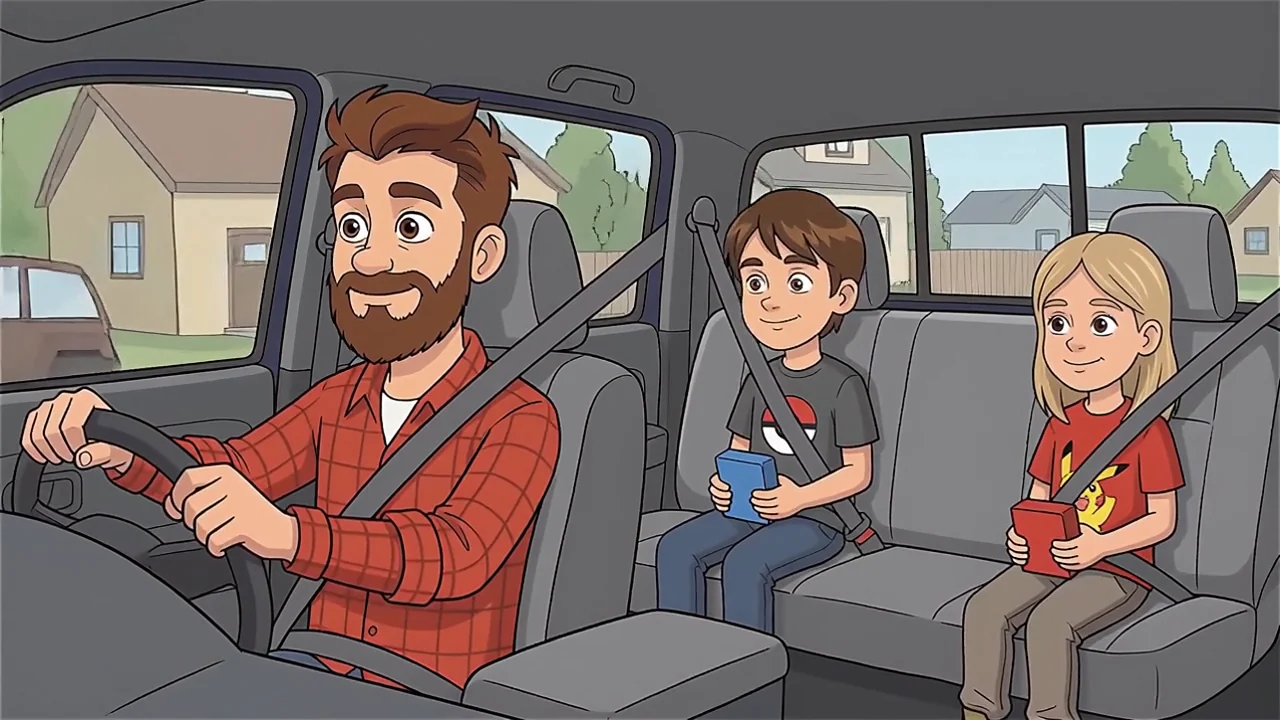
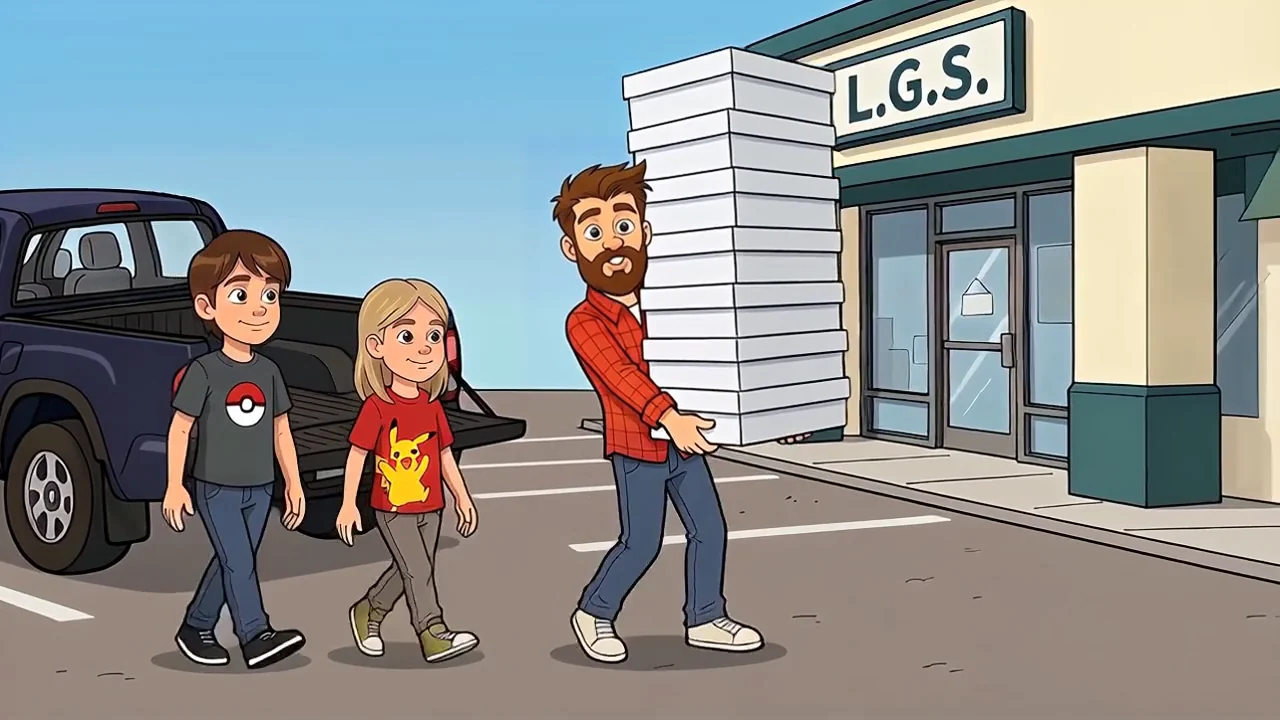
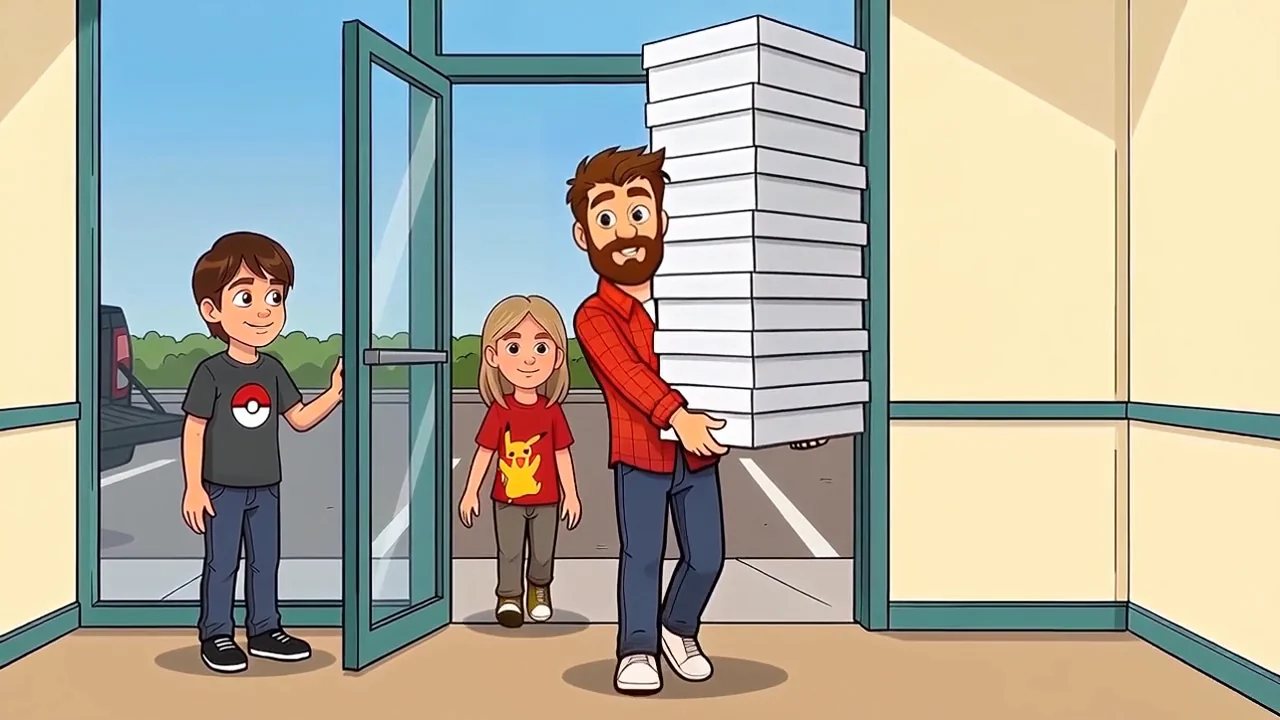
WAN 2.5 made the revised loading and driving clips. WAN 2.7 made the walking and doorway motion. We then used Sync 3 with isolated vocals to repair Dad's lip sync. Only Dad's region received that repair; the kids stayed in the original footage.
Review the whole clip. A good still cannot prove stable motion or accurate lip sync. We also repaired rolled sleeves and removed a box label that changed during motion.
Models we used
| Step | Pixio model ID |
|---|---|
| Realistic Nerd Dad portrait | pixio/seedream-5-maker |
| Mara, Nora, and Evan portraits | pixio/nano-banana-2 |
| Character sheets, scene stills, and repairs | pixio/nano-banana-2/edit |
| Realistic homepage loop | pixio/kling-o3-4k-maker |
| Saturday loading and driving | pixio/wan-25-preview/image-to-video |
| Saturday walking and doorway | pixio/inference.wan2-7.img2vid.v1 |
| Dad's lip-sync repair | pixio/sync-lipsync/v3 |
The image steps used zero extra credits on my Maker plan on September 12, 2026. This includes the new portraits, sheets, and review edits. The two Sync 3 repairs cost 165 credits in total. Plan fees and model limits still apply. Check your allowance before generating.
Our portrait upload exceeded a model's 10 MB limit. A smaller JPEG solved it. Check returned file types too: we requested PNG but received JPEG sheets.
Keep one approved portrait, one current sheet per character, and short written notes. Use them again for every new scene. The prompt starts the design. Review keeps it consistent.
Frequently asked questions
What is an AI character reference sheet?
It is one image with several views of the same character. It records the face, hair, body, clothes, expressions, and colors for later images or video. It is not a rigged 3D model.
How do I keep the face consistent?
Reuse one approved portrait and the same written traits. Give each reference a clear role. Compare every new face with the portrait. Correct specific errors before making scenes or video.
Does a seed or detailed prompt guarantee the same face?
No. Save the seed and settings, but keep the image reference too. Our sheets still missed panels and changed small details. Review the actual result.
Can I make these sheets without spending Pixio credits?
Our new portraits and sheets used zero extra credits with an active Maker subscription on September 12, 2026. The subscription is paid. Model inclusion and limits can change, so check the current allowance and actual charge before generating more.
Which image should I give the video model?
Use a reviewed scene image or portrait with a clear face. Keep the sheet as a design reference. Check the resulting motion, hands, mouth, and loop seam; a consistent still does not guarantee consistent video.
How do I keep several characters distinct?
Use a separate portrait and profile for each person. State which reference defines each face. A style reference should control drawing style, not replace the cast member's age, face, or clothes.